Shifted jamb framing
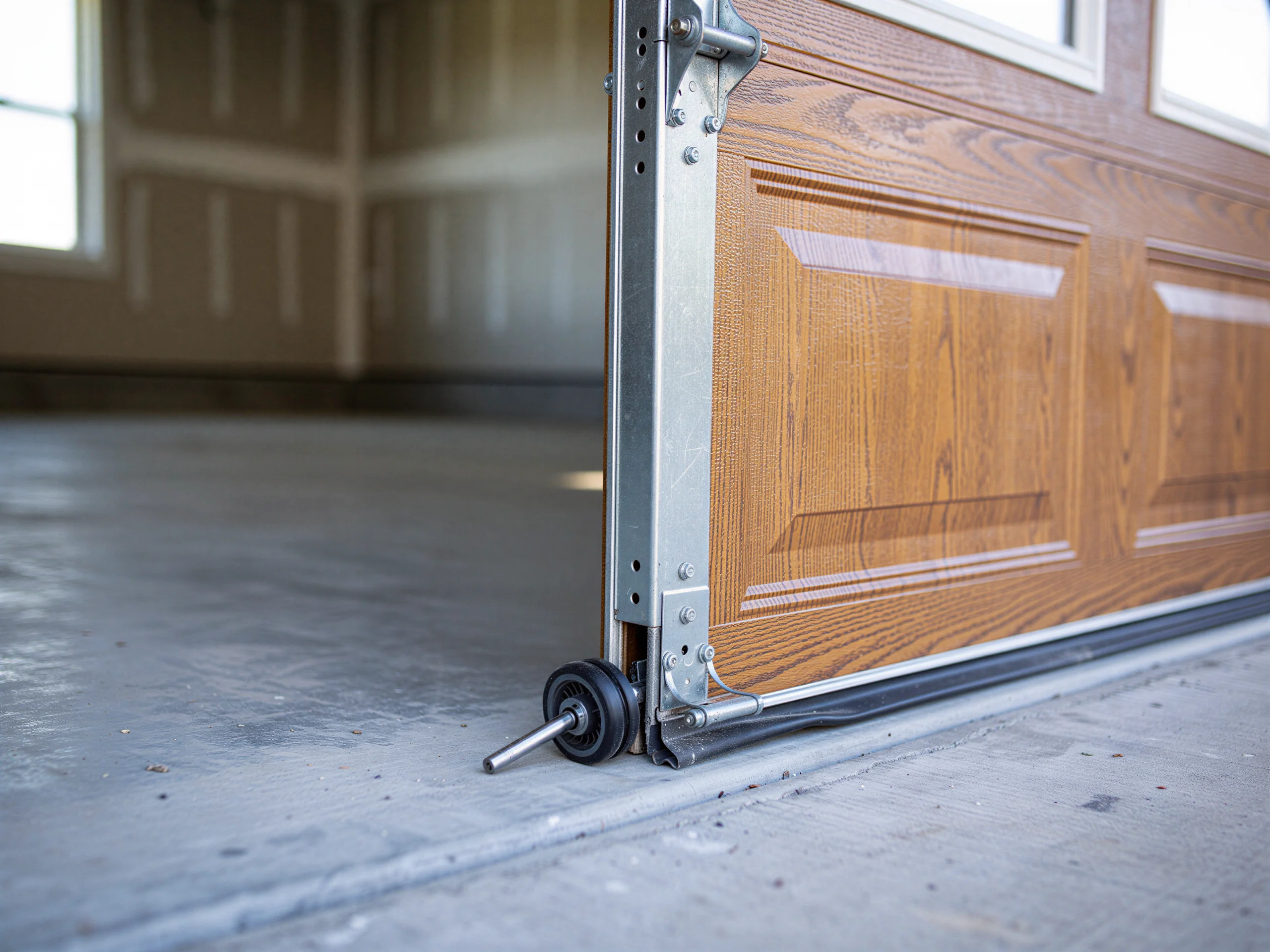
On a house from the 1940s or 50s, that's rarely a simple lubrication fix. Original jamb framing has often shifted slightly over seven decades, which throws off track alignment in ways a modern, dead-level stud wall wouldn't.
Wheeling, WV
Wheeling homes mostly date to 1938-1960, and cold winters stress original hardware. Here's why doors fail here and what a proper repair actually involves.
Local causes
Most of the houses in Wheeling's service area went up between 1938 and 1960, with a median build year of 1949. That's true across six named areas we work in, not just one neighborhood. A door bought and hung in that window, or a replacement installed decades later on the same original framing, is running on hardware that predates almost everything the industry builds now - track widths, spring winding, drum sizing. Pair that with a cold climate that sees real winter severity, not just a few frosty mornings, and you get steel that contracts hard every night for months. Metal fatigue doesn't care how well a door was maintained in July. It shows up in January, on a door that's been quietly losing tension since the first cold snap. Owners here often assume a sticking or noisy door is just "old age," but it's usually the specific combination of 70-plus-year-old mounting points and a freeze-thaw cycle that newer housing stock in other parts of the state simply doesn't deal with in the same way. We see this pattern often enough across Wheeling's older blocks that it's worth naming directly rather than treating every call as a one-off mystery.
Symptoms
The call usually starts the same way: the door is heavier to lift than it used to be, or it jerks instead of gliding, or there's a bang partway up the track.
On a house from the 1940s or 50s, that's rarely a simple lubrication fix. Original jamb framing has often shifted slightly over seven decades, which throws off track alignment in ways a modern, dead-level stud wall wouldn't.
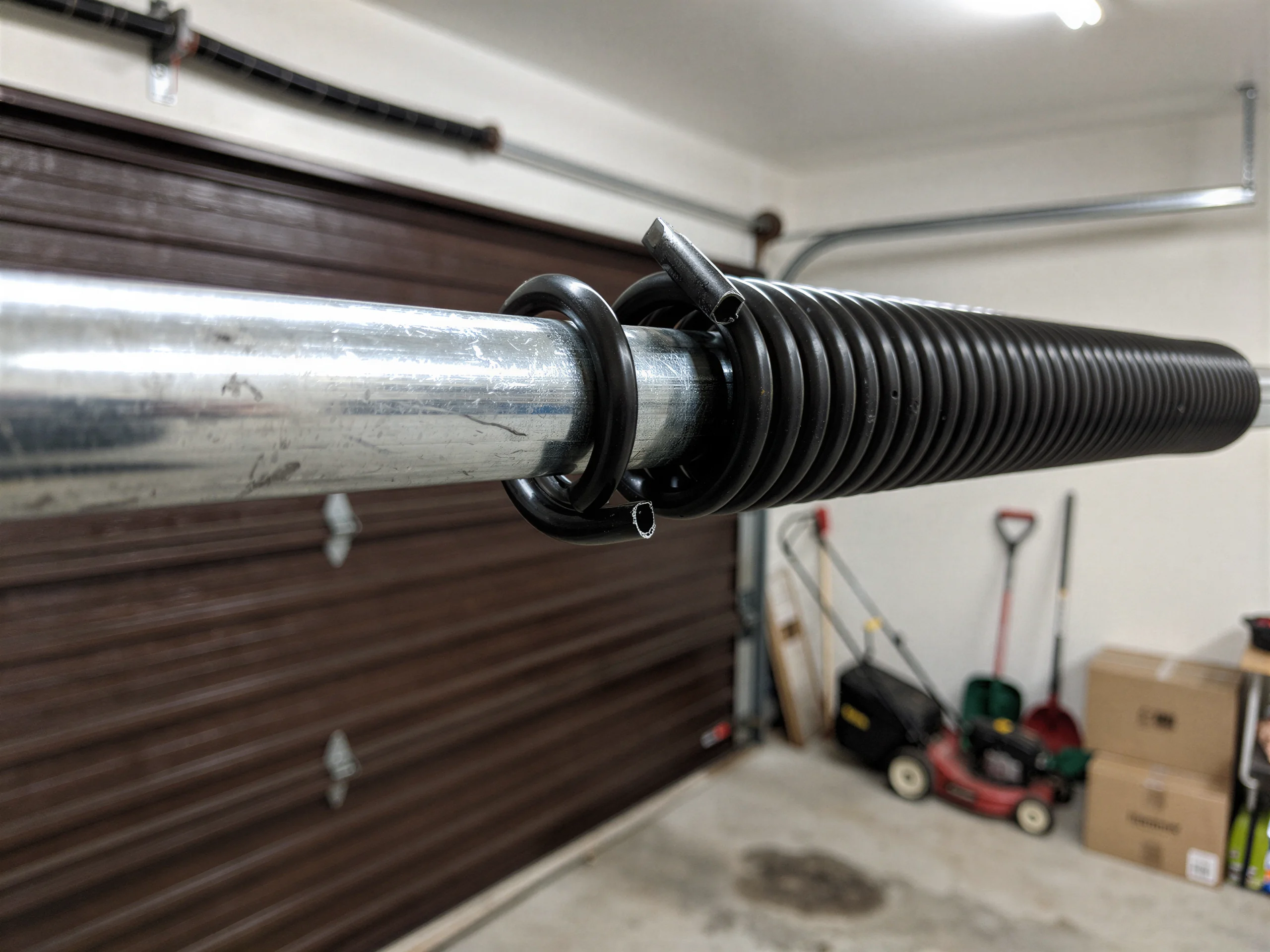
Cold makes it worse - a spring that's borderline in October can snap outright on a 10-degree morning because the steel has lost flexibility right when the door is heaviest to lift by hand. Some owners hear a loud pop and the door won't budge at all; others notice a slow drift, where the door starts closing a little crooked each week until one cable finally lets go.
Either way, the root cause on these older homes is almost always some mix of aged hardware and structural settling, not a single bad part. Treating the symptom without checking the framing it's mounted to just means a second call next winter.
The repair
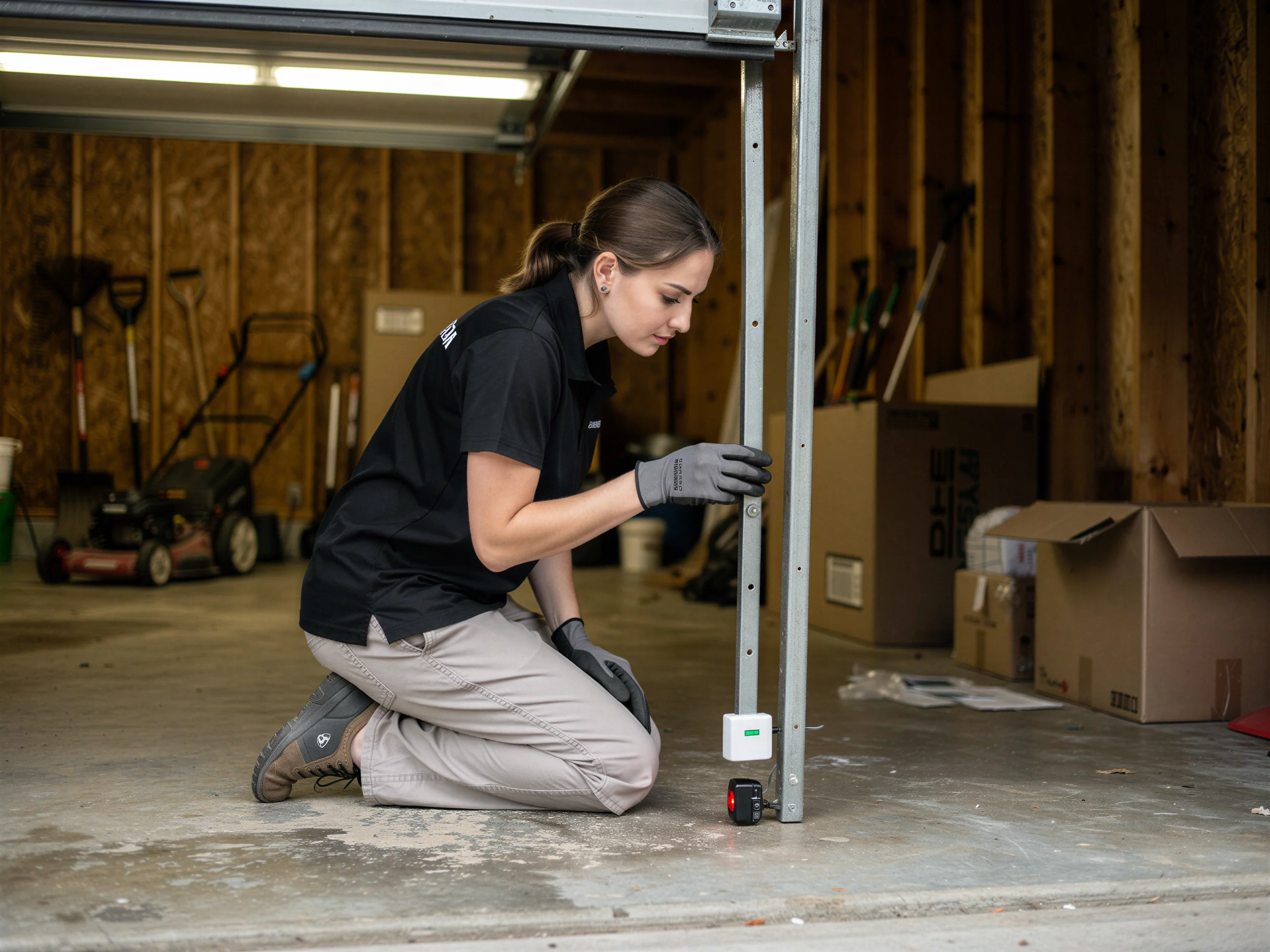
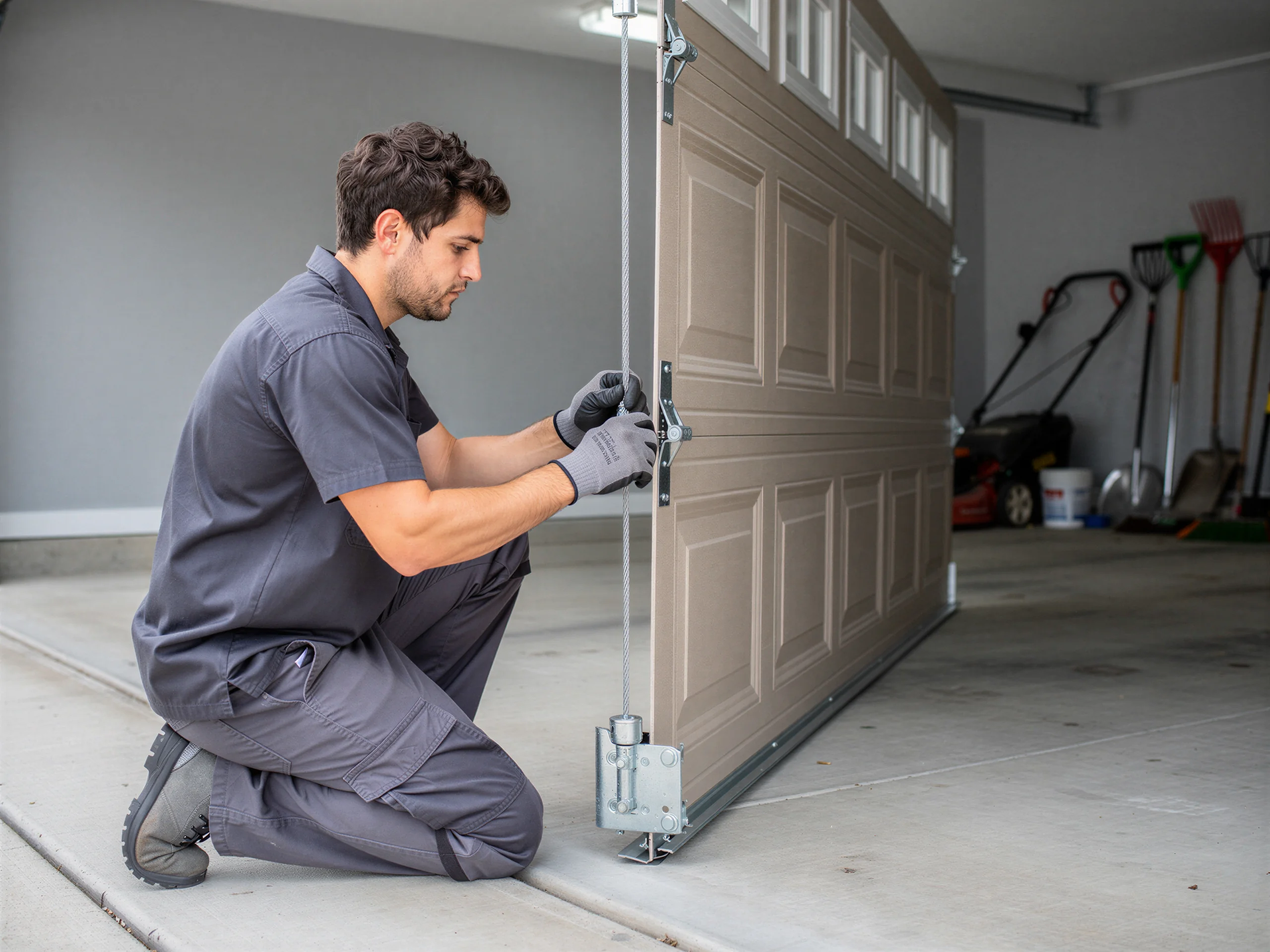
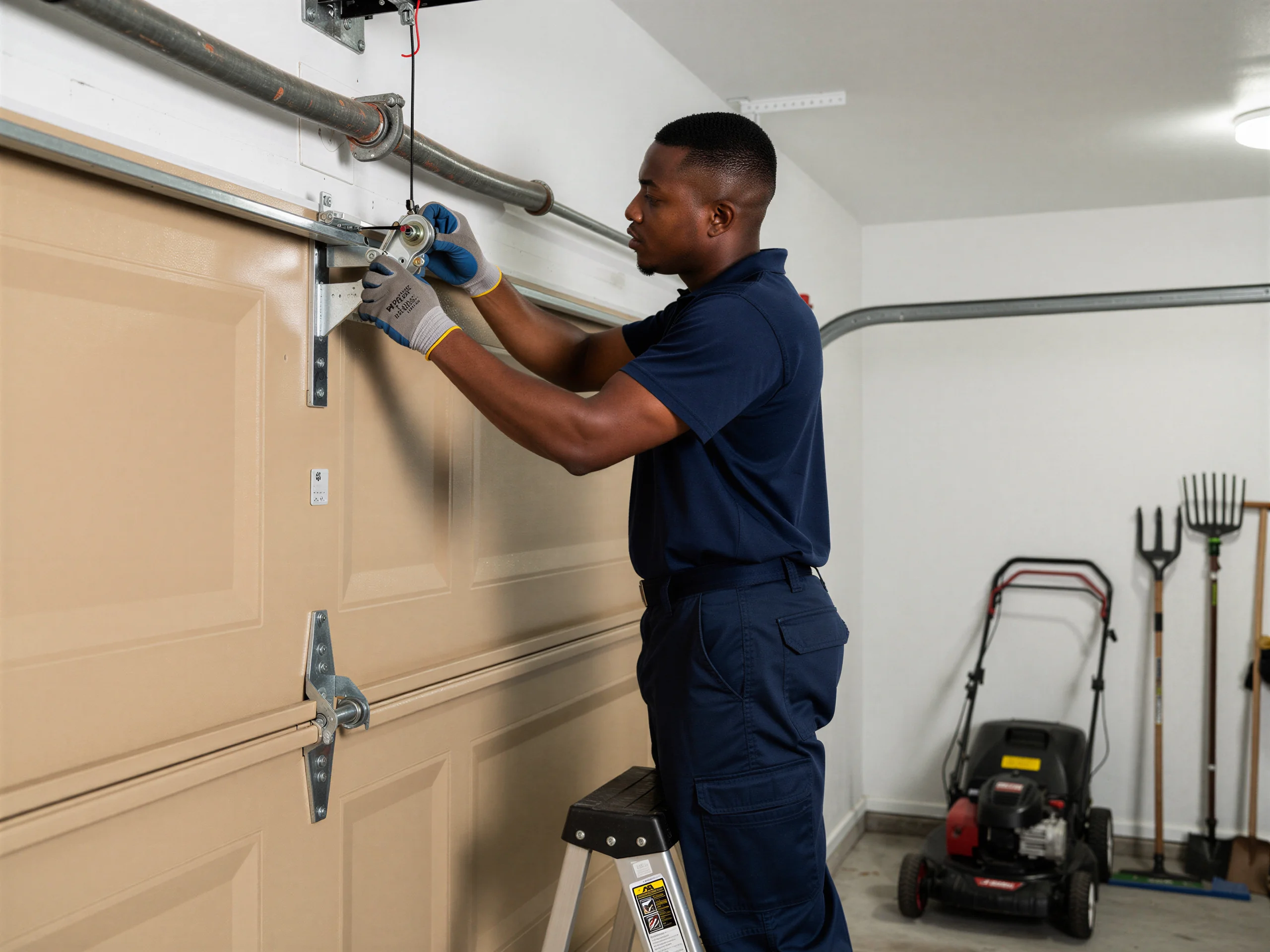
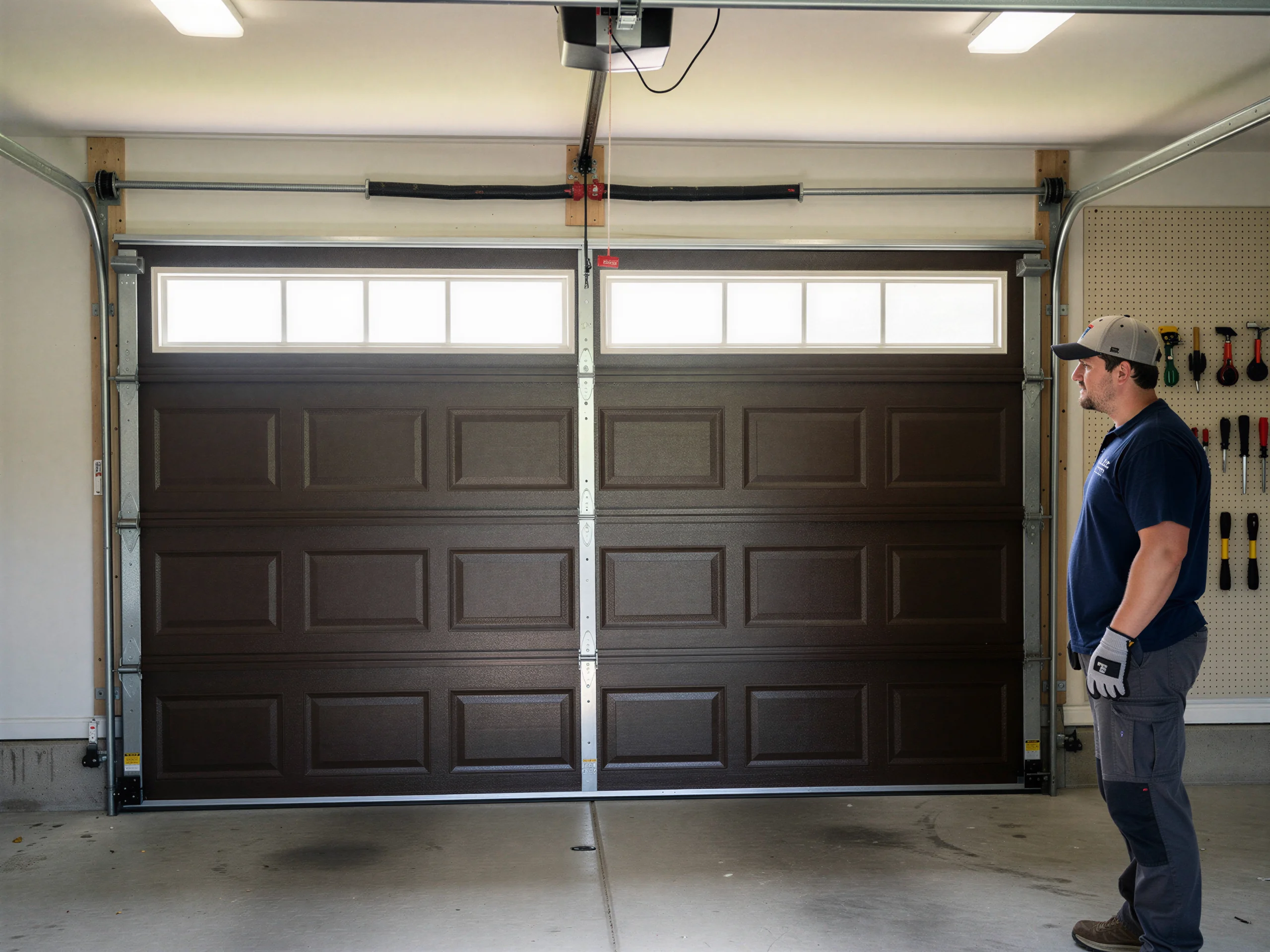
On a house built in this era, the job starts with checking whether the track and jamb are still square to each other, because a brand-new spring or cable installed on a frame that's drifted out of alignment will fail again fast.
We check the mounting hardware itself - on original framing from the 1940s and 50s, lag bolts and brackets have often loosened or corroded enough that they need to be reset or replaced before anything else is touched.
Spring sizing matters more here than people expect: a door panel that was standard weight when the house was built doesn't always match what's stocked as a default replacement today, so we measure rather than assume. Cold-weather lubrication is different too - summer-grade grease can gum up and slow a door down once temperatures drop into the range this area sees most winters.
One honest limitation: if the jamb framing has settled enough that the door can't be brought back to square without carpentry work, that's outside a garage door repair and we'll tell you so rather than force a fix that won't hold.
Timing
A straightforward spring or cable replacement on a door that's still structurally sound doesn't take long once a tech is on site and has the right spring size in hand - most of these calls are same-visit work. Where it runs longer is on houses where the track or jamb needs realignment first, since that's a separate step before the replacement parts even go in. Given how much of Wheeling's housing sits in that 1938-1960 window, we see the longer version of this job often enough that we don't quote a single number over the phone without seeing the door. Winter calls can also be harder to schedule tightly, since cold-weather failures tend to cluster during and right after a hard freeze, and that's when several households in the same older block call within days of each other.
Questions
A lot of the housing here was built between 1938 and 1960, so the springs and track hardware on many doors are either original-era replacements or mounted on framing from that period. Combine that with a climate band rated severe cold, and steel components that are already fatigued lose flexibility fast, which is why winter mornings are when springs actually let go.
Both get checked, because on older Wheeling homes they're often related. A spring can fail on its own, but on houses from this era the jamb and track have frequently shifted slightly over the decades, so we check alignment before assuming a new spring alone will fix it.
Sometimes, if the track and jamb are still square. But on a lot of the older stock in this area, the mounting hardware has loosened enough that replacing the spring alone just means it works loose again. We check that first rather than guess.
We don't quote a fixed number without seeing the door and the backlog that week, since cold snaps tend to bring in several calls from the same older neighborhoods at once. Call and we'll give you a real estimate for that day.
Explore more
Ready when you are
Wheeling Garage Door Co repairs and installs garage doors, springs and openers in Wheeling, WV and the surrounding area.